วันอาทิตย์ที่ 3 กุมภาพันธ์ พ.ศ. 2556

Music for Health & Wellbeing

Relaxation & Therapy Music DownloadsUsing Music Therapeutically - Adobe document (including Mindfulness of Music)Music affects our thoughts, feelings and behaviours.  The rhythm can affect our bodies so that our pulse and respirations are in time with the music's beat or rhythm.  Music can relax or energise, and certain pieces of music can affect us in deeply personal ways.  Whilst most of us listen to music, making music can be a very effective means of expression.  It’s also great for our self-esteem and confidence. Music can be listened to, used as a means of expression, or performed.You don’t have to be a “musician” to enjoy playing an instrument.  We can improvise with any instrument and anything else too!  Hammer handles make great claves, broom handles and dustbins (and lids), saucepans, small branches from a tree, plastic bottle filled with rice, hardboard as a “wobble board” – just a few examples!  Sing! How many of us sing in the bath/shower – wonderfully uninhibited and expressive.  Go for it!There are different kinds of music for all tastes – classical, pop, rock, rap, jazz, folk – each culture, each generation, has its own style.  Music is very personal and affects individuals in different ways.  Different parts of the body resonate to different sounds and pitches, and most significantly, certain kinds of music can powerfully effect the human spirit or soul.  We can listen to music anywhere and everywhere.Those who make music with voice or instrument experience an added dimension to life, but many who might make music do not do so perhaps through lack of confidence.Music is able to cut across boundaries, through language, culture, age and religion.Music is already therapy worldwide, whether through making music or listening.  It is an important part of spiritual life.  Most significant religious traditions use music to help create the mood for prayer, worship, reverence or joyful celebration. Listening to music can change your mood – sometimes dramatically.  If you’re feeling low, it’s tempting to play slow sad music, but this can make you feel worse.  An uplifting tune or cheerful song can improve your energy levels and your emotional well being.  However, music is very personal to each of us, and what affects one person in one way, may affect someone else very differently.  You probably have some idea of what affects you and how, but you can experiment and try out different pieces of music.Music in film and television shows us how music can affect mood.  A romantic drama would have a very different filmscore to a thriller.  The old “silent” films originally had a pianist in the cinema playing along, trying to strike the right mood.  At times, when watching a film or TV programme, you know what’s about to happen because of the music being played – you can anticipate the terror, such as in “Jaws”.Tunes such as “Pomp and Circumstance” (Land of Hope and Glory), will instil great pride and patriotism.It has been shown that “musak” – background music – can affect our shopping habits, encouraging us to spend more money.  A survey by the Psychology Department at Leicester University (website) showed how music can affect the products we buy.  For a set period of time they played French music, and watching with a video camera directed at the wine shelves, showed a significant  increase in the number of bottles of French wine being sold.  They then played a German tune, which showed the same results with German wine.  The buyers seemed unaware of the influence of the music.Scientists have shown how even hens are happier and produce more eggs when played calming music!Playing Mozart when studying is said to increase our IQ.  (Weblink) Another study showed that children who learn a musical instrument are much quicker at developing spatial awareness and problem solving skills.There are times when we might feel like taking our temper out on a set of drums, and it would almost certainly help us to feel better.  Relaxation (or New Age) music has a slow rhythm.  Sounds are often synthesised and there may be added natural sounds, such as whalesong, birdsong, waves or gentle rain to help produce a feeling of calm and relaxation. An article appeared in ‘best’ dated 2 February 1999, with the headline ‘Musical Minds’:  “Adults who had musical training as children have better word recall, a recent study has found.  Researchers say that women who went to music lessons for at least six years before the age of 12 were significantly better at remembering words than those who hadn’t.  Music could also be beneficial in treating memory loss or language difficulties.” McDonalds did their own research, which showed that we eat according to the speed of the music being played. Therefore, when a restaurant is busy, with a queue building up, McDonalds plays fast music, thus ensuring that the customers will eat quickly, and leave the restaurant sooner, freeing up the table for the next customers.UK schools found that classrooms are much calmer with relaxing background music, with even the most “unruly” child being able to work and concentrate better.  They have been (quietly) playing a variety of music that children wouldn’t normally listen to such as classical and traditional music from all over the world.     A teacher in Wales used Mozart's music with similar effect -  Learning with Mozart

The Mozart Effect
Online Resources on Music/Brain Research
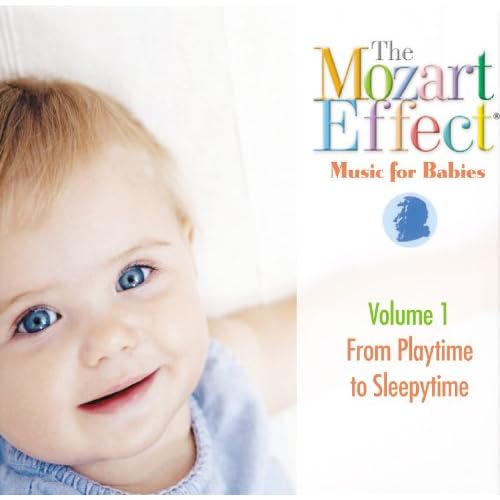
The buzzword, "Mozart Effect", has been bandied about by popular print and broadcast media. It is featured in parenting, education, and music oriented publications, and in the mainstream general press. While it has renewed interest in classical music education and focused much deserved attention on the general field of childhood development, the phrase (and the popular notion of its meaning) has been used to sell music lessons, music products of all kinds, including "Mozart Makes You Smarter" product lines, and frankly, some music education snake-oil.
What's behind this popular "concept"? Where did it originate? What does it really mean? Does listening to Mozart really make you smarter? If so, how? In what way? Is this claim real or just a hype? What to make of it all?
Here is a collection of links to promotional pieces and authoritative online resources that can provide some answers. While there is editorializing and there are commentaries found on this page and in the linked material dealing with the research surrounding the "Mozart Effect", ultimately, the reader is responsible for applying critical thinking to sort it all out.
The term "Mozart Effect" arose from the work of University of California at Irvine's formidable team, Dr. Francis Raucher, Dr. Gordon L. Shaw, and their colleagues. Their neuroscience/music studies and their findings have caused quite an impact on related fields and some controversy. After exploring the materials, linked here, whatever conclusions you come to, you will have to admit that this is very intriguing stuff.
Before exploring links to the materials appearing here, gain some valuable perpective on the subject by going to the link to the article, On the Importance of Being Accurate, published in The Music and Science Information Computer Archive, (MuSICA).
MuSICA's editor, N. M. Weinberger, shows insight that is nothing short of brilliant. A comprehensive catalogue of and links to MuSICA, found below in a separate section, contain abstracts that provide an overview of a wide range of neuroscience music/brain research, along with material dealing directly with the "Mozart Effect" and which could have been included in this section.
The purpose for assembling this collection of links to resources is to shine light on this subject and on research that has received much well-deserved attention, but has, too often, been trivialized and misrepresented. Bookmark this page to return for updates.


Ones to Watch: 10 best new music acts in 2013     PART II


Bastille
Bastille
Sound: indie, electronic, guitar
About: If you've downloaded either of the band's mixtapes, you'll know by now that Bastille can put their stamp on virtually any classic hit. However, the band will be proving their worth with their own cuts come March when they release their debut album Bad Blood. Expect soaring vocals over gigantic choruses full of melancholic strings, glitchy electronics and echoed beats.
They said: "This whole thing started as a bedroom project that didn't have any particular sound or direction - I wanted it to be a real mish-mash of sounds and I think it's something we've managed to retain."
Tracks to download: 'Bad Blood', 'Icarus'


MS MR
MS MR
Sound: Alt-pop
About: This New York duo count Jay-Z among their fans, and it's easy to hear why the rapper is all-too-willing to support them. Ghostly harmonies and floaty synths can be heard throughout their songs, resulting in some of music's most exciting up 'n' coming witch-pop. We can expect more of the same from their debut album, which is due out in May.
They said: "Max and I are into collage and mixed-media, and I think we put our personalities into the tracks and they all sound like MS MR. People will be surprised that it's not all one thing, and that we have more pop songs, moody ballads and some country."
Tracks to download: 'Dark Doo-Wop', 'Bones'


Singer-songwriter Daley.
Daley
Sound: Soul/pop
About: Having toured the open mic circuit with fellow pop warbler Jessie J, Daley managed to bag the services of his pal for his major label debut single 'Remember Me'. The star's mix of soulful tones, refreshed with modern quirks is a good indication of what we can expect from him throughout 2013, as he launches on both sides of the Atlantic.
He said: "My album is going to be a mix of American R&B stuff, with real British influences. I've been calling it future throwback soul."
Tracks to download: 'Remember Me', 'Alone Together'


AlunaGeorge
AlunaGeorge
Sound: Alt-soul/garage
About: Consisting of Aluna Francis and George Reid, AlunaGeorge's recent Brit Awards Critics' Choice shortlist mention is a clear sign they're set for big things. The duo's mix of wobbly synths and light garage beats has been described as the latest genre-bending music trend "popstep". They were also the online favourites throughout 2012, having tallied up the most mentions on the blogosphere.
Tracks to download: 'Your Drums, Your Love', 'You Know You Like It'


M.O girlband
M.O
Sound: Urban pop
About: If you like your girl groups more hard-lined than cutesy, look no further. Pop trio M.O debuted earlier this year (yes, that is Frankee from Mini Viva) with their R&B bounce-off 'Wait Your Turn'. It places them somewhere between the musical sensibilities of TLC and the sassiness of Mis-Teeq, and heralds a refreshing and updated stance on the UK's urban pop scene.
They said: "We're all so excited for 2013 and really grateful for the support we've had over the past few months. The reaction to 'Wait Your Turn' has been so much more than we ever imagined at this point. We're still in the studio and will be getting back in after Christmas again. Next year Is hopefully going to be our year - we're ready to work even harder - that's our M.O!"
Tracks to download: 'Wait Your Turn'


Ones to Watch: 10 best new music acts in 2013     PART I


As 2012 draws to a close, it's time to look at the enormous selection of brand new acts who are shaping up for big things next year.

Last year's Digital Spy ones to watch list included the likes of Emeli Sandé, Lana Del Rey, Stooshe, Conor Maynard and Azealia Banks; all of which have gone on to have a hugely successful 12 months.

We've listed our ten favourite up 'n' comers that we predict will find success in 2013 below:

Gabrielle Aplin
Gabrielle Aplin
Sound: Folk-pop singer-songwriter
About: 20-year-old Gabrielle was eventually signed to Parlophone after self-releasing three EPs to considerable fanfare for an unsigned act. She's currently fronting the John Lewis Christmas advert with her cover of 'The Power of Love', which topped the charts earlier this month. Her debut albumEnglish Rain is out early next year, headed up by lead single 'Please Don't Say You Love Me'. In short, she's the female Ed Sheeran.
She told us: "It's been an insane year, but everything's been growing nice and steadily. For people who have discovered me through the advert, I'm excited for them to hear more."
Tracks to download: 'Home', 'The Power of Love', 'Please Don't Say You Love Me'

Listen to 'Please Don't Say You Love Me' below:


Angel Haze at MTV Brand New 2013 launch
Angel Haze
Sound: Rap, hip-hop
About: The Native American has been billed as a rival to Azealia Banks, although their music is in fact very different. She appeared seemingly out of nowhere in mid 2011, but her slick rhymes over minimal production caught the attention of critics on her 'Reservation' EP in July this year.
She told us: "The support I've had so far has been really humbling. I try not to pay too much attention to it, it's what I've worked for so it's nice to reap the benefits. The album should be out in May. I like to write about what I know, which right now is nowhere near anything sexual."
Tracks to download: 'New York', 'Werkin' Girls', 'Love of my Life'

Listen to 'Love of my Life' below:


Kodaline
Kodaline
Sound: Cinematic folk-pop
About: The Dublin-based quartet have seen their star rise faster than they expected over the last few months, after their online buzz track 'All I Want' was picked up by Radio 1 and used during a trailer for Grey's Anatomy. Fortunately, the song's big, folky sound and catchy chorus isn't just a one off, which fans will discover when they release their 'High Hopes EP' and debut album next year.
They told us: "We're Irish, we're not allowed to turn free drinks down."
Tracks to download: 'All I Want', 'All My Friends'

Listen to 'All I Want' below:


A*M*E
A*M*E
Sound: Electropop
About: 18-year-old Sierra Leone-born A*M*E signed to Gary Barlow's Future Records label late last year. Since then, she's put out buzz tracks 'Ride Or Die' and 'Find A Boy' as well as proper single 'Play The Game Boy', all of which fall somewhere within the space of urban-electro-dance-pop. She's also a huge fan of K-pop and '90s dance and calls Barlow 'Uncle G'.
She told us: "I think [the album is] about 90% there, but like every artist I'm going to keep writing until it's done. We've got enough good tracks to make the album but I want them all to be incredible tracks, so I'm going to keep working with producers as much as possible."
Tracks to download: 'Find A Boy', 'Play The Game Boy'

Listen to 'Play The Game Boy' below:


K Koke
K Koke
Sound: Rap, grime
About: Kevin 'K Koke' Georgiou has made little secret of the fact that he was wrongly imprisoned for seven months last year. After releasing a series of mixtapes he was signed to Roc Nation by Jay-Z himself. His current single, the stadium hip-hop blasting 'Turn Back', features Maverick Sabre and his upcoming album includes guest spots from Rita Ora and Emeli Sandé.
He told us: "There's a lot of talk, but I'm more or less ready, so we'll just have to let the music do the talking!"
Tracks to download: 'Turn Back', 'Roc The Life'

Listen to 'Turn Back' below:


The Original Sound of Music Tour

The Original Sound of Music Tour


Bus-Terminal Mirabellplatz - St. Andrä Kirche
A-5020 Salzburg


Sound of Music Tour

Tour 1A: As seen in the Movie!


A wonderful ride with breathtaking views of the landscape where the opening scenes were filmed. Relax and listen to the original Sound of Music soundtrack. Our English-speaking guide not only shows you the highlights of the film 'Sound of Music' but also the historical and architectural landmarks in the city, as well as a part of the picturesque lake district.The Mirabell Gardens were laid out in the 18th century. Maria and the children were seen dancing around the statue of Pegasus, the winged horse, and throughout the gardens singing 'Do-Re-Mi'.Leopoldskron Palace - the front side of the castle was used as the Trapp family home, the children were boating on the Leopoldskron Lake and fell into the water. The Venetian room was copied from the castle and used as the ballroom.Hellbrunn Palace - this hunting castle was built in the early 17th century by Prince-Archbishop Markus Sittikus. In the gardens the glass pavillion was reconstructed for the pleasure of those fans still returning after 30 years.Nonnberg Abbey is the oldest convent in the German speaking part of Europe. Maria was a novice there. The baron and Maria were married here in 1927. The scenes for the movie made here include the opening with the nuns going to Mass and Maria coming too late.Scenery shown at the beginning of the movie was filmed at Lake Fuschl on the way to St. Gilgen. Like the Mozart family, visitors from all over the world appreciate the beautiful village in the Salzkammergut.In Mondsee Cathedral the film wedding between Julie Andrews as Maria and Christopher Plummer as the Baron took place.


วันเสาร์ที่ 2 กุมภาพันธ์ พ.ศ. 2556


about classical

[-]
Classical music is hard to define in specific terms, but it is generally understood to be music rooted in Western European traditions performed by trained musicians in formal settings like concert halls, opera houses, and churches. Its key emphasis is the faithful interpretation of composers' written scores. Classical music's roots lie in the chant melodies of Medieval religious rites. Its contemporary incarnation encompasses everything from opera and the symphony orchestra to chamber ensembles, solo works, choral music, songs, film music, and the avant-garde. Works from the intervening centuries make up the bulk of the recorded repertory, and they mirror the artistic and architectural trends of the Renaissance, Baroque, Classical, Romantic, and Modern eras in their sound worlds and conception. The dichotomy between classical and popular music is a fairly recent cultural development. In fact, much of what is considered classical music today grew out of, was influenced by, or was popular music of its time.

classical subgenres and styles

Classical

featured classical albums

The score to the final installment of the Twilight Saga cranks up the drama and the action.

featured classical albums

about country


Country music is about tradition, yet its simple form lends itself to endless variations on similar themes. Like blues -- the two genres often shared themes, melodies and songs -- country is a simple music at its core. Most of its songs are built around three chords and a plain melody, but these forms are so basic, they allow for many different styles, from the gritty sounds of honky tonk to the jazzy improvisations of Western Swing. Country music grew out of American Southern folk music, both Appalachian and blues, and old-time 
country was simple and folky, with just guitars and fiddles. As the genre progressed, old time music evolved into the rhythmic guitar-and-fiddle driven traditional country that became the foundation of modern country music, from honky tonk and Western Swing to the pop-oriented Countrypolitan and rock-inflected Bakersfield Sound.


review

Alone among her peers, Taylor Swift appears genuine. Which isn't to say she's without affectation or that she avoids artifice. She uses both when it suits her, as any real pop star would -- and if her 2012 albumRed intends to do anything, it's to prove Taylor is a genuine superstar, the kind who transcends genre, the kind who can be referred to by a single name. Uneven as it is -- and it is, running just a shade too long as it sprints along in its quest to be everything to everyone -- Red accomplishes this goal with ease, establishing Taylor Swift as perhaps the only genuine cross-platform superstar of her time. Naturally, in order to accomplish this transition from country ingénue to pop star, Swift takes her country bona fides for granted, ignoring Nashville conventions as she rushes to collaborate with Britney Spears hitmakerMax Martin and Snow Patrol's Gary LightbodyRed isn't sequenced like a proper album, it's a buffet, offering every kind of sound or identity a Swift fan could possibly want. Taylor deftly shifts styles, adapting well to the insistent pulse of Martin, easing into a shimmering melancholy reminiscent of Mazzy Star ("Sad Beautiful Tragic") and coolly riding a chilly new wave pulse ("The Lucky One"). Combined with the unabashed arena rock fanfare of "State of Grace" and the dance-pop of "We Are Never Ever Getting Back Together" and the dubstep feint "I Knew You Were Trouble" -- not to mention the ludicrous club-filler "22" -- Red barely winks at country, and it's a better album for it. It is, as all pop albums should be, recognizable primarily as the work of Taylor Swift alone: her girlish persona is at its center, allowing her to try on the latest fashions while always sounding like herself. Although she can still seem a little gangly in her lyrical details -- her relationship songs are too on the nose and she has an odd obsession about her perceived persecution by the cool kids -- these details hardly undermine the pristine pop confections surrounding them. If anything, these ungainly, awkward phrasings humanizes this mammoth pop monolith: she’s constructed something so precise its success seems preordained, but underneath it all, Taylor is still twitchy, which makes Red not just catchy but compelling.

SampleTitle/ComposerPerformerTimeStream
1 4:55
2 3:43
3 4:02
4 3:39